
Who do you pray to?
According to Genesis 1:27, God made us in his image. In 1977, Genesis wrote “I was feeling part of the scenery / I walked right out of the machinery”.[1] These are both powerful statements which speak to how and why we worship what we do: we find the numinous in our own reflection, but also use the idea of God as a reclamation of power. Is God escape, or comfort? Is God inherent or ideal?
In part, God is there to remove willpower from our lives, for us to defer to. Things we know we cannot be are categorised as a higher power wielded against us: the gods roll the dice and the chips fall where they may. Providence comes to us at moments, inopportune or not, and guides us to or away from something, allowing us to feel our emotions without responsibility. But can God exist in this secular age? Is there a transfer of power, akin to Gaiman’s novel [2] American Gods where the new idols of celebrity and technology replace Easter, Loki, and Anansi? Arguably, as the values of the world changes, so does the face of what is worshipped, but the power of existing as only a concept is that the concept may change, but its being remains constant. God the concept remains alive in the minds of so many people worldwide that He must and does live, regardless of his changing image; God’s word is distributed by god’s messengers all over. Regardless of whether or not we believe in God or gods, god does exist because as a concept the ineffable divine is in all cultures and all people recognise the idea. Consider God akin to Schrödinger’s Cat: Schrödinger created his ‘cat in a box’ idea to illustrate the concept that something can both exist and not simultaneously, and God can simultaneously be a simple concept that everyone understands and impossible to define in a Wittgensteinian sense. We can understand God, but not communicate God. God, though, is still an important figure, and all the more powerful because the figure is omniscient and mellifluous enough to adapt to each of our own personal needs. My research bumps up against God all the time: in Kant, in Huet, in James I. Porter. I find myself constantly asking what God is to others, but it is simultaneously impossible to answer with nuance and obvious when painted in broad strokes. Is searching for God, then, inherently an abstract art?
The struggle to define what God is to us is a recurrent theme in poetry: Plath names both “Herr God” and “Herr Lucifer” as her enemies in Lady Lazarus, and her Ouija board was Pan, a “chilly god” who she seeks to raise that she may write. Milton tries desperately to communicate his own relationship to divinity through his “adventurous song,” and poets even offer their poetry to the gods through dedication or practice. Inspiration, then, can be said to be a god of its own: indeed, perhaps, one might characterise the muses as gods, or God as the muse. It is unlikely that anybody considers their Pinterest boards to be akin to the divine, but I argue that the unique collection of things we admire is where we find kernels of the divine, and looking for god, then, might be looking for the synthesis of what is holy to us. Each of us has, in Christian terms, a ‘personal relationship with God,’ but this is overly simplistic when categorised as ‘God the father who art in heaven’. Instead, we must look at who and what provokes the divine response within us. Is it prayer to listen to your favourite musician, to eat macarons, or write fanfic? In a way, and not in a way that suggests Taylor Swift is god, but in a way which acknowledges that the divine is both within us – we are made in God’s image – and that “I had to listen, I had no choice,” something which we wield and control and only makes sense in a social world. My divine is different to yours, and therefore when I ask ‘what do you pray to?’ I am asking what sits upon your altar – which ideas are god’s words to you, who becomes the saint who helps you transition into the divine state? I personally do not pray to God, the father, son and holy spirit. I do not pray to Sylvia Plath either, quite, but Plath is in part a conduit to God for me, so to say I do not pray to her is also incorrect. Perhaps the most correct way that I can put it is that I use Sylvia Plath – the image of the person, the poetry, the community – in acts of devotion which best resemble prayer. I use Plath as a tool, some kind of aspergillum that isn’t inherently holy but contains what is, and requires my presence to shake and release droplets of Godliness over a willing congregation.
Is it sacrilegious to believe that I can find God in anything? Is this an inherently atheist perspective? Am I overly informed by Madonna the pop singer and forgetting Madonna the mother of God?
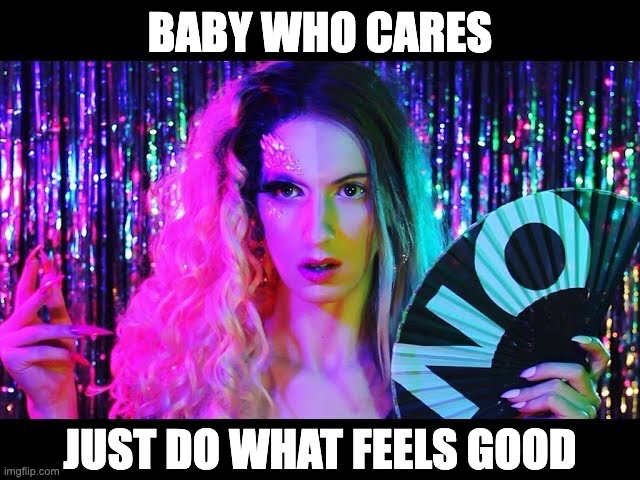
I think it’s important to acknowledge that divinity, devotion, prayer, and poetry are all rituals we choose elements of within our own lives. Religion is a doctrine, but doctrine is not practice. God is not simply deferment – not even in the modern, cynical age – and yet the usage of the term must expand beyond that which we have no power over or we will not recognise our true higher power and the divine will become defined through others’ eyes. Each of us is facing down the barrel of a short life and we must decide for ourself what the higher power which will guide us will be, and how we will commune with that which moves us spiritually. God the concept is abstract art, but our own practice should suit what we hold up as the higher power and place value on including divinity – however it looks to us – within the everyday. Who do you pray to? Certainly something different to me.
To get this article, and others, as physical media, subscribe now.
[1] Yes I am aware Solsbury Hill is a solo single. I do not worship at the altar of Phil Collins, everything I know about Genesis the band I gained in passing from reading about Alan Hull.
[2] I feel so funny about this one – I’m usually a ‘keep their name out of your mouth and live in peace whilst ignoring them’ kind of canceller rather than a ‘shout about their actions’ canceller, but American Gods was the kind of book that changed my thoughts and articulated an idea so well that I don’t think I can write this piece without mentioning it. Make up your own mind or just acquire it without paying.
On This Topic:
- This article comes with a playlist! There is, of course, the title track, then the other Genesis, and I can’t bring myself to reference Genesis without citing Raye at her most experimental. The gods may throw the dice, or even the devils… and then, of course, there’s the classic and its redux and the lovesong and the question and the inspiration underpinning them all. And more Taylor, for good measure.
- I watch a lot of Religion For Breakfast.
- I fuck with Wittgenstein and his work subtly underpins a lot of how I think.
To-Do:
- Write an article specifically relating to the politics and divinity within my (own relationship with the) Quaker faith. It’s kind of a big question and I’m kind of busy right now, though.
- PhD upgrade next month!! Next month is basically this month!! Get it sorted.
- Stop ignoring other uni paperwork. Do your yearly check-in.
Today’s Culture:
- I am trying to take a leaf from the summer fashions of Japan to look chic in a London heatwave.
- I’ve given up cooking and will only be eating soup until it cools down.
- My next journal is going to be moon themed, so I am soliciting suggestions for what you associate with the moon – quotes, images, stickers, music videos…
Make a one-time payment for this content. £8.60 is the cost of a zine (including shipping), so purchases of that amount or higher will receive a handmade, physical copy of Late Romantic.
Become a paid subscriber and receive a handmade zine, sent out the first Monday of next month. If your subscription level does not cover postage, the zine will be sent out bi-monthly. £8.60 covers UK postage; £16.45 covers international shipping.
Make a yearly purchase to get two months of free physical copies! £86 covers UK postage; £197.60 covers worldwide shipping
Choose an amount
Or enter a custom amount
Your contribution is appreciated.
Your contribution is appreciated.
Your contribution is appreciated.


Leave a Reply