
A talk for NELL’s author celebration 2026: Dickens Day
Charles Dickens was preoccupied with wealth. A reasonable focus, I’m sure we’d all agree: not only was he turning his lens on society and commenting on rich and poor, he was writing from his own experience of poverty, and also of riches. We heard already how young Charles Dickens experienced debt in a uniquely Victorian way, but I’m here to talk about the other half of the financial picture. As one of the most famous public figures of his day, Dickens made himself rich, and often chased wealth. He once calculated in his account book that he needed about £9000 that year to cover all his expenses – at a time when a well-off family with servants could run their home on £300. Dickens banked with Coutts, he bought his groceries at Fortnum & Mason, and his lecture tours helped create the resale market for concert tickets. Dickens knew wealth.
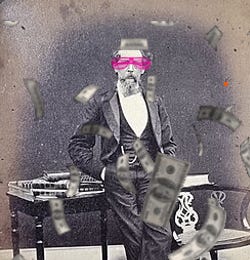
In Dickens’ books, rich and poor rub up against one another – as I’m sure we all do in London. Perhaps on the bus here today was a millionaire, perhaps you queued behind a homeless person in the corner shop. We’ll never know the financial status of most of the people we see, and I’m sure we all understand that many status symbols of a luxury lifestyle can be faked, stolen, or paid for whilst skimping on essentials. London is a consumerist paradise now and it was then, with fast-moving fashions for everything. In some ways, then, his preoccupation with wealth is a facet of London life and London writing, but you don’t see the same juxtaposition in Sam Selvon or Nancy Mitford. For pretty much every Dickens novel you could make a case that the primary theme or narrative drive is money. Let’s look more closely at Great Expectations to see how he presents money, and how the story is constructed around money. We’ll investigate some of the key phrases which Dickens uses to discuss money and finish by giving one interpretation of what the author wants his readers to take away.
Great Expectations
The title of the novel is repeated on several occasions within the book, each time making it clear that it relates to money, and specifically what money will do for our protagonist, Pip. Main character Philip Pirrip – Pip – is raised from the orphan-boy apprenticed to his brother-in-law, the blacksmith of a small town, to a young man of “a handsome property” by an anonymous benefactor, with the sole condition that he keeps the name ‘Pip’. On sharing the news with the family, Pip’s lawyer tells him:
“that it is the desire of the present possessor of that property, that [Pip] be immediately removed from his present sphere of life and from this place, and be brought up as a gentleman,—in a word, as a young fellow of great expectations.”
The novel imbues the phrase with a certain amount of irony: ‘great expectations’ are both what is now expected of him, and what he expects now from the world. Even the structure of the novel expresses the double meaning of the phrase, with volumes one and two closing with “THIS IS THE END OF THE FIRST [or second] STAGE OF PIP’S EXPECTATIONS,” arguably using the structure of the bildungsroman to highlight that, as Pip grows, the very meaning of the phrase ‘great expectations’ changes. Pip’s expectations, then, are not just surrounding money: they become the adventure he is living and that we are reading about, and money is used as a metaphor to understand the change in his mind and manner as he ascends the social ladder.
Pip hears the phrase first from the lawyer, then himself latches onto it, reusing it in his internal commentary, but not aloud. Pip thinks that ‘great expectations’ mean that a rich man should be a gentleman – that is, there are certain things he should know, have, and be which would mark him out as different from the lower classes. He is bound “for London”, must stop working with his hands at “smith’s work in general”, and believes that even the cattle “wear a more respectful air” around him now, never mind the curious country bumpkins who used to be his community, to whom “nothing was to be said, save that I had come into great expectations from a mysterious patron”.
At this point in the novel, Pip possesses the expectations, and needs wealthier people to guide him: lawyers, friends-of-friends, and neighbours. He does not act like a gentleman, nor does he have control of his own finances; instead, his lawyer’s clerk observes that because he “keep[s] the cash… we shall most likely meet pretty often.” Later on, however, Pip refers to himself as having been “apprised of my great expectations” – that is, informed of them. They cease to be something he possesses by the time he knows how to act.
Here in the story he is in debt, spending mainly on fripperies for himself – fancy clothes, books, a social club – to keep up appearances of being a gentleman. His friend is in a commensurate amount of debt, and the young men seem to believe that ‘great expectations’ are not simply for the future but must manifest in their current stage in life, whilst also being aware and worried about what that means for the future. Pip and his friend spend some of their time together keeping account books and deciding to live smaller, only to fail when temptation presents itself. Pip tells the reader that
“the only good thing [he] had done, and the only completed thing [he] had done, since… first apprised of [his] great expectations”
is to support his friend in getting a job. Pip anonymously pays money so that his friend, who wants to marry and must therefore have a steady income with which to support a family, can join a business as a partner. That means the friend can both be a gentleman and work, with full social dignity, but Pip must keep this act of charity anonymous, sending the message that hard work and generosity are less a part of a gentleman’s lifestyle than shopping and drinking.
‘Portable Property’
Dickens does not reject spending: remember, this is a man who bought his groceries in the same place as the Queen. The book distinguishes between how rich people and the lower- and middle-classes spend in terms of their property. Property here is used exactly how it would be today – assets, belongings, personal effects – but Pip is once again under the advisement of both gentlemen and lawyers as to how he should relate to his assets. The idea of “portable property” is brought to Pip’s mind by his lawyer’s clerk this time, and once again we see the phrase repeated throughout the text. The best explanation of the idea comes very close to the end of the novel, where this same clerk tells Pip:
“I do not think [your friend] could have been saved. Whereas, the portable property [he owned] certainly could have been saved. That’s the difference between the property and the owner, don’t you see?”
The clerk is showing us how easy it is to transfer the ownership of objects and how they are therefore superior to what might be considered better things to invest in, like homes, or might even be more prudent than saving your money.
This highlights another difference between the gentlemanly perspective on money and what we might call a pragmatic attitude to wealth: for rich people, money is gauche. It is taboo to discuss money, to work for a living, or even to pay for things yourself – your servants or your lawyer will do it for you. It is unusual to demonstrate your wealth in any way, and it is his wearing too much jewellery that prompts Pip’s question to the clerk in the first place. The clerk tells us, yes, the many rings he wears have all been “gifts” to him. “They may not be worth much,” he says, and may not be worth the wealthy Pip thinking about, but his
“guiding-star always is, ‘Get hold of portable property’.”
‘Portable property’ is not simply things that you think are valuable: they might be “curiosities”, like when the clerk is paid in a pair of expensive pigeons. Whether for meat or racing, a pigeon is worth more to him than an IOU, even a legally binding one. It is also, in some ways, kinder: remember the workhouses the Victorians sent debtors to, and consider that the clerk is taking less of a value to have his payment readily available to him now.
The clerk’s friendship with Pip is a strange one, which rejects that he is the same person at home and in the office:
“My Walworth sentiments must be taken at Walworth; none but my official sentiments can be taken in this office.”
His talk of ‘portable property’ is office talk, and although Pip puts the reader in mind of this sentiment when visiting his home it remains official advice. We are encouraged by Dickens to read between the lines as to why the only time he does reference ‘portable property’ at home in Walworth. The clerk tells us about “a certain person not altogether of uncolonial pursuits, and not unpossessed of portable property”. This is using legalese to say ‘a convict who was transported to Australia for committing crimes and is now rich, possibly also as a result of crimes’. The clerk is using ‘portable property’ because he understands money in a way a rich man – even his boss, the lawyer – cannot fully comprehend. Money is transient in this world, and Pip soon finds this out. His benefactor, the convict, gets taken into custody and everything he owns is seized by the authorities, leaving Pip with only the things he directly owns. Since the gentlemanly thing to do was to let other people pay, Pip is in debt to everyone: his clothes, food, furniture, books, club memberships, jewellery were all paid for by debt, and everything is taken from him and returned to the original vendor.
The clerk “rather reproachfully” reflects that the money is absorbed by the crown and is no good to anybody now. Through him, Dickens tells his reader that “Every man’s business… is portable property.”
Chapter 59: Epilogue
Pip describes his ‘great expectations’ as having ‘dissolved’ alongside his fortune when he sees his old brother-in-law again after many years. The expectations are no longer something he can either possess or finesse in service of his future. Returning to his family, Pip is reminded that his gentlemanly ways taught him to be “impatient… and out of temper” with the steadfast, “always right” blacksmith. By the end of the novel, Pip no longer sees his own expectations as great, but he is still marked for a different life to what he might have had before: he has travelled, living in Egypt, and works “pretty hard for a sufficient living” with his mind, rather than his hands, which he categorises as “do[ing] well” for himself.
The final chapter of the novel presents him with the reason he had wanted to be a gentleman, the beautiful, ladylike Estella. She has married a gentleman
“who had used her with great cruelty, and who had become quite renowned as a compound of pride, avarice, brutality, and meanness”
The great house, the grandest thing Pip could imagine in his youth and the place where he had first become aware of his roughness is now a “cleared space… enclosed with a rough fence.” Everything has changed, but money is still the driving factor: the house was Estella’s inheritance, and selling it has made her independently wealthy, and she questions Pip as to his income. Dickens is leaving us with open questions hanging over the idea of wealth – whether it improves your life or your character, whether privilege is a benefit, what even makes a good life…
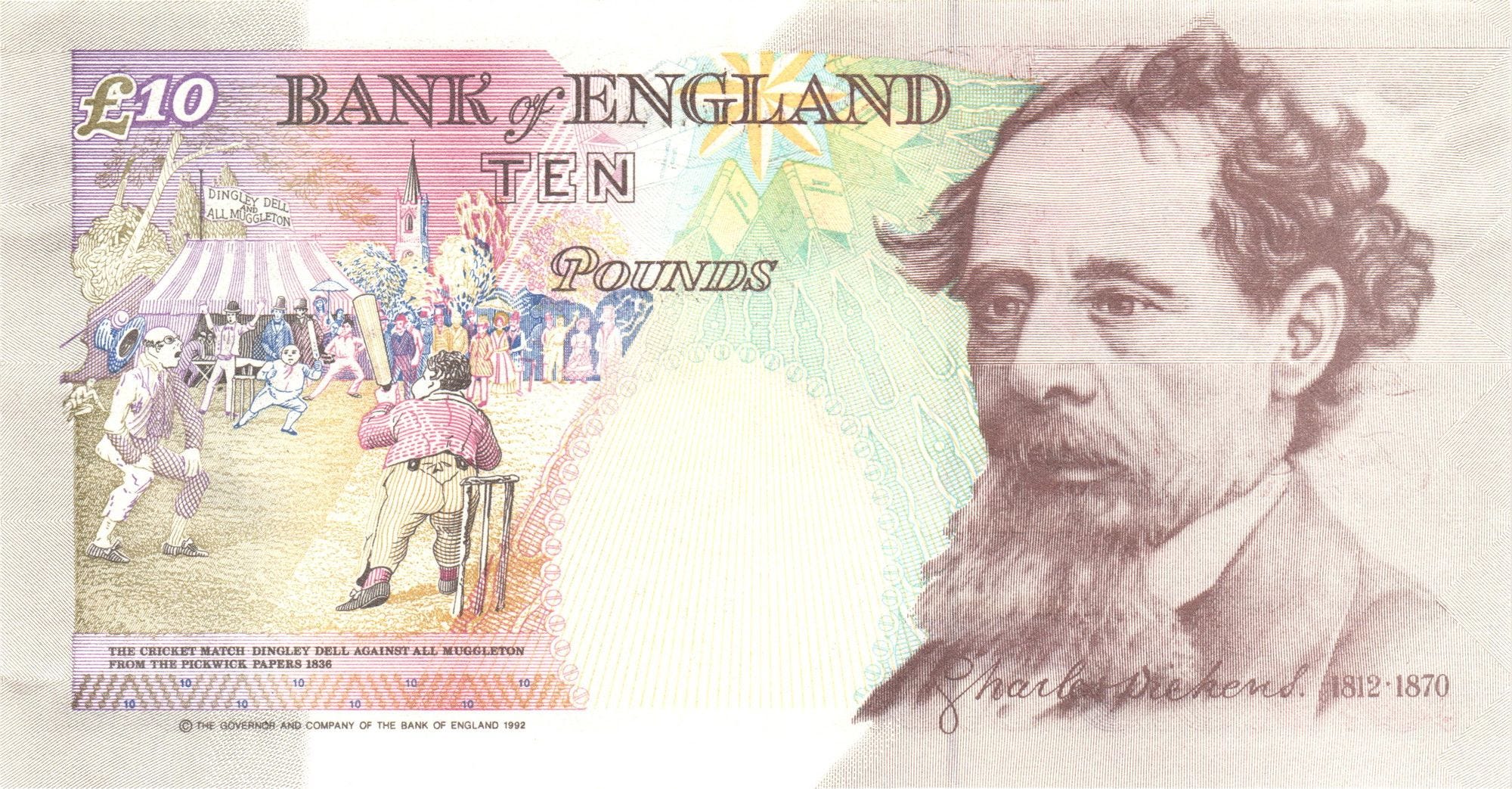
It’s a strange place for a rich man to leave his novel, and it’s no wonder that Dickens is so associated with money that the first place many of us encountered him, is this:
To get this article, and others, as physical media, subscribe now.
On This Topic:
- Take a more comprehensive look into Dickens’ personal finances
- Look into the best character more deeply
- Or just read the book for free on Gutenberg
To-Do:
- Stop napping every day. Just because it’s the holidays doesn’t mean you’re on a break from reality.
- SEND YOUR CHAPTER
- Start a Latin book club?
Today’s Culture:
- The new John Green is his best yet. I loved it.
- A seasonal reminder that I have the most bitchin Halloween playlist
- I’m glad this Dior skirt sold to somebody else because I was seriously contemplating buying it.
Make a one-time donation
Make a monthly donation
Make a yearly donation
Choose an amount
Or enter a custom amount
Your contribution is appreciated.
Your contribution is appreciated.
Your contribution is appreciated.


Leave a Reply