
A review of recent Sylvia Plath events
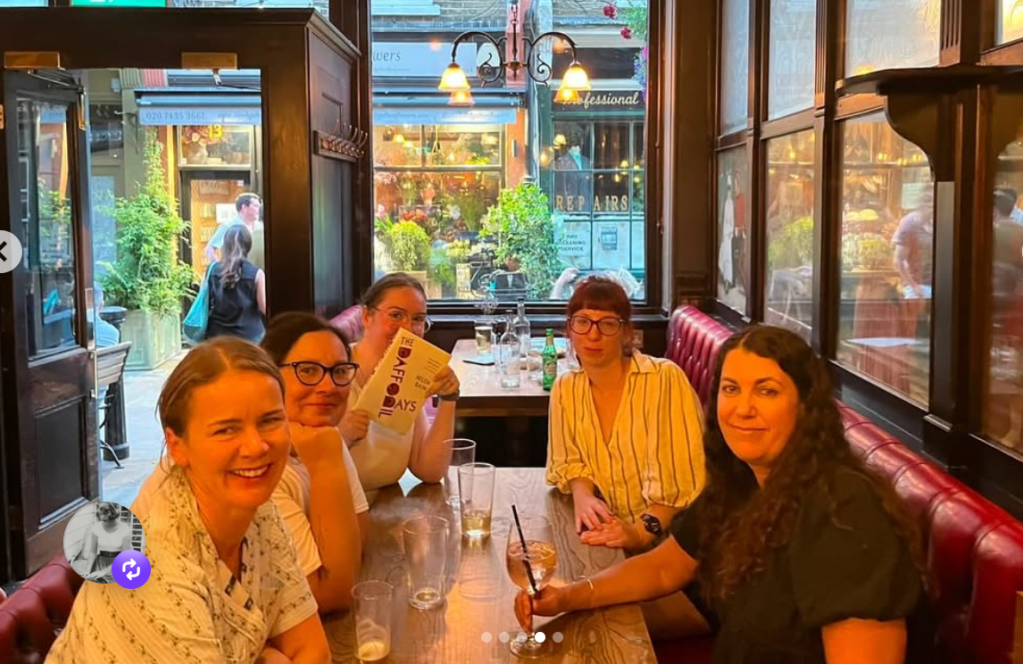
25th June – Waterstone’s Hampstead (London)
Heather Clark (author of Red Comet) and Helen Bain (author of The Daffodil Days). Highlights:
- What is the difference between a biographer and a historical fiction writer? Helen used historical fiction to go where a biographer could not – moments we have no evidence for but feel true, such as Sylvia Plath’s washing machine installer. “Fiction sees the spaces biography cannot inhabit.”
- Devon feels ‘technicolour’ in Plath’s letters, and although her life in America, Yorkshire, London, and even Cambridge has been covered extensively, her time in Devon is often skipped over, despite it being a happy and productive time that hugely influenced Plath’s writing.
- Helen’s novel is structured in a way that gives Sylvia a happy ending, ie backwards. Again, such a lot has been said about early 1963 that it seems grotesque to give it such a heavy weighting in our popular conception of Plath.
- Plath has been heavily flanderised! “We don’t have that much control about how others see us,” but Helen wants to show “a more disjointed and hopefully more real” portrait of Plath, and especially challenge the “inevitability” we see in Plath’s narrative [ie, the steady march to her death, which was by no means a foregone conclusion].
- Helen used oral history and local research to imbue her work with a strong seam of choices and identity – both individual and local. The novel is told by people who intersect with Plath – sixteen separate voices, none of them Plath and with varying degrees of closeness in Plath’s life. Devon was physically and archivally present in the book, and Helen worked with local residents in North Tawton to ensure people were happy with how they (or their relatives) had been portrayed.
- Helen gave thanks to the Devon & Exeter Institution, who are local people answering the call to oralise archival work. She also thanks the local beekeeping society and bellringers (especially Brian Drake) and was keen to ensure she got the local traditions correct.
- The bells were a particular focus for discussion: “Plath would have been hearing these bells all the time” due to Court Green’s situation so close to the churchyard, and the bell sequences “all have different meanings”. Helen was sure Plath would have had a sense of artistic appreciation and been interested in the rhythm of the bells – as a real “poet’s poet” she demonstrates her skill with metre regularly. Helen told a story of attending Brian Drake’s funeral and speaking with his daughter, which showed that her suspicions of Plath’s interest in the bells was bourne out.
- Helen quoted an unnamed poet when discussing why she didn’t choose to go into Plath’s voice, even in the close 3rd person this book is written in: “to a poet, Sylvia Plath is the voice of God.” Instead she used “minor characters” in Plath’s story to explore the intersection of lives.
- Heather compared the book to Sebald, especially Austerlitz, and Helen brought up Rosencrantz & Guildenstern Are Dead.
- Ted Hughes’ voice is not so sacred and the final chapter is written from his perspective. Helen said “everyone told [her] not to do it” and that her editor was concerned that she was “giving [Hughes] the last word,” but that [the editor] wept when she submitted the Hughes chapter. Heather agreed that she liked the ending.
- “I love the idea that people’s marriages are a mystery… [the Plath-Hughes union has] just been chewed over by everyone”.
- Helen wanted some life lessons from other people, because Plath & Hughes were so young and so dedicated [to poetry]. Their split was a professional as well as romantic breakup, they lost their first readers AND their spouse. Plath had to leave Hughes after his affair because “her standards were so high” especially when concerning him – once he left his pedestal, tarnishing himself, she couldn’t take him back.
- 1961 was both near and far – people are dying now who lived then.
- The easiest people to write were Marvin & Kathy Kane, because it was a situation Helen could relate to and the story was an anecdote about female friendship. Helen imagined a Marvin who couldn’t quite understand what Sylvia and Kathy saw.
- The novel was written as Helen’s PhD.
- People underestimate Plath’s humour! She was so self-knowing. Daddy can definitely be read as a satire and it almost sounds like she’s going to laugh in the recording she makes of it.
- Is Helen bored of Plath? “I never get tired of her voice… I still read her letters for fun.” Plath colonises the mind, never leaves, and at every stage of life she means something different to her reader
- (I was also lucky enough to be able to go chat Plath afterwards with some other Plathians in Al Alvarez’ old haunt The Flask after the event… we talked more about the intersection of personal / professional breakup, as well as normal friendly chitchat)
27th June – Newnham College (Cambridge)
I couldn’t attend this one as I was at a different event in Ipswich. I welcome somebody who did attend (and hopefully made notes!) telling me what went on. This was just Heather Clark (author of Red Comet) speaking.
30th June – Daunt Books, Cheapside (London)
Helen Bain (author of The Daffodil Days) and Amanda Golden (author of The Poems of Sylvia Plath) were hosted by Dorka Tamás (author of Sylvia Plath and the Supernatural)
- Amanda has known Karen Kukail (librarian at Smith focussed on Plath) since 2001
- Amanda says that as an undergraduate student she found poetry intimidating, but that through Plath’s life and journals she found her way into her work, and through Plath’s incredible knowledge she find her way into the poetic tradition more widely. Plath has a very readable voice – verve, joy, and life are especially present in the journals.
- The new edition of Plath’s poems was influenced by Ted & Olwyn Hughes’ “collected poems working papers” (kept at Smith) – Karen and Amanda asked how they put it together and which questions they had asked to avoid duplicating work. This edition became such a behemoth because the publishers wanted something different to other editions of Plath’s work.
- Plath’s decisions are rapid and clear – you can see her incisively decide between draft versions and ideas.
- Another core research tool was Plath’s household calendar. On this she listed her chores, which helped elucidate Plath’s layers as a person and her complexities as well as her everyday existence. This artefact tells the story of her as focusses, and shows her ability to revise a draft. It also takes her off the marble plinth and situates her as a housewife, mother, human.
- Everyone has their own Plath.
- The most frustrating things for Amanda are “things not in the world” ie the Plath lost media (poems, novels, letters). Hopefully some booksellers or similar people have them.
- Helen told us that she would not let herself change facts for her narrative, only that she used fiction as an ‘educated guess’ to fill in gaps and add sensible emotions to the narrative. She followed a poetic architecture for her book: each shorter chapter corresponds to a poem and tries to show how Plath’s inspirations were layered and constructed beyond simple ‘this means that’. Amanda shared that there are no interpretive readings in the Poems. The notes function more like a museum plaque, giving the reader information without reading into the poems.
- Does Plath feel differently pre- and post-Devon? This is complicated because of all the life changes which occurred there, but post-Devon there are
- Bee poems
- Surrealism
- Bleakness
- Rebirth
This is not to say that these elements were not present before, but Devon did seem to draw them out in the opinion of the panellists.
- Plath Studies has changed in that there is much less blame. There is less anger in Plath scholars, and less emphasis on the ‘confessional’ aspects of her work. Additionally, there is somehow more to talk about than there ever has been before! Eco-criticism etc. Plath’s voice is somehow modern, contemporary – she fits in with current trends in academia more widely.
- Karen Kukail itemised the acknowledgements in The Poems of Sylvia Plath as the book was going on, which meant every person who helped out was rightly credited and helps explain why the acknowledgements are so long.
- (This time we went for our friendly drink before the event, I didn’t stick around afterwards so I can’t tell you what was discussed then, but we had great talk about newly rediscovered photos and Plath tattoos at the adorable Williamson’s Tavern nearby)
2nd July – Faber Bindery (London)
The first event on this day was a lunchtime poetry annotating session run by Lavinia Singer and Jane Feaver, both from the Faber Poetry team.
- We annotated the poem Wintering, discussing themes and imagery presented by the poem, including the feminine labour of caring for the dead, the word ‘asininity’ and who is going into the cellar at what time. We were lucky enough to have a beekeeper in the audience who shared that even the best beekeepers will lose roughly 30% of their hives annually.
The second event on this day was an evening bringing Plath’s work into conversation with contemporary writers. Rachael Allen, Imtiaz Dharker and Eimear McBride all read both Plath’s work and their own.
- Rachael called attention to Plath’s relationship with water, and Plath’s “ubiquity” to poets – “like The Beatles must be to musicians,” by which she said she meant that she is embedded in the culture and you can hear her influence in others’ work.
- “Instead of the picture of Sylvia Plath becoming clearer [over time] she becomes obfuscated”
- Poetry is “performatively intimate,” Plath is (or is seen as) her life)
- “She [Plath] is less part of a constellation and more something like the moon.”
- Plath is an American demotic writer.
- Imtiaz read more poetry, and bookended her section with Plath. She also shared some titbits about her own life that elucidated her poems, in the spirit of Plath.
- Eimear said that as a novelist she was compelled to read from The Bell Jar
5th July – City Hall (Bradford)
- Amanda Golden (author of The Poems of Sylvia Plath) and Iona Murphy (lecturer at the University of Huddersfield)
- Annoyingly I couldn’t go to this one – I’d have gone up if it was a morning or Saturday talk, but I would never have made it back in time for work. If you were there please share your insights with me!
11th July – Royal Festival Hall (London)
- Maggie Nelson reads from her book The Slicks
- I am on holiday and cannot go. All my friends are going to meet Maggie and talk about Plath and Swift all night and I’m so grotesquely jealous, please have a good time and tell me all about it.
To get this article, and others, as physical media, subscribe now.
On This Topic:
- Upcoming Plath events: please let me know if you hear of them, and if you host one, please tell plathsoc@gmail.com so we can tell everybody else. If you went to one of the ones I missed, email me (or let’s be real, text me – Plath people generally have my number) and I’d love to link to your write-up or insert you here.
- The glorious transatlantic accent of Sylvia Plath should not be missed.
- Join The Sylvia Plath Society for Plath updates.
To-Do:
- Revise for theory test
- Pack for holiday(s)
- Finish books so I don’t have to pack them
Today’s Culture:
- Sports Day was the worst day of the calendar year as a child and I’m here to tell you it’s just as bad as a teacher.
- I bought some matcha Lindor – don’t even bother, they are just white chocolate flavour, not even a hint of matcha. Disappointing.
- Happy British South Asian heritage month! Go listen to White Town and watch Green Knight.
One-Time
Monthly
Yearly
Make a one-time donation
Make a monthly donation
Make a yearly donation
Choose an amount
£5.00
£15.00
£100.00
£5.00
£15.00
£100.00
£5.00
£15.00
£100.00
Or enter a custom amount
£
Your contribution is appreciated.
Your contribution is appreciated.
Your contribution is appreciated.


Leave a comment